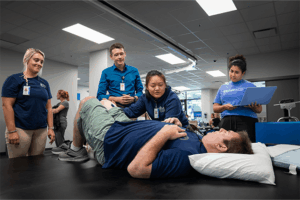
Healthcare is a growing industry in India and across the world. Among the many allied healthcare professions, physiotherapy has become one of the most in-demand careers. If you are planning to enter this field after 12th, you may have come across the DPT course.
Students usually search online for:
-
What is DPT course?
-
What is the eligibility, syllabus, and duration?
-
What is the scope and salary after DPT?
This blog will answer all these queries in detail.
Introduction to DPT Course
DPT full form: Diploma in Physiotherapy
The DPT course is a 2-year diploma program designed to train students in the basics of physiotherapy, rehabilitation, and patient care. It focuses on providing knowledge and hands-on skills to help people recover from injuries, disabilities, surgeries, and other physical conditions.
It is one of the quickest ways to enter the healthcare profession for students who do not want to pursue a long-term degree like BPT (Bachelor of Physiotherapy).
DPT Course Highlights
| Feature | Details |
|---|---|
| Course Name | Diploma in Physiotherapy (DPT) |
| Course Type | Diploma (Paramedical/Allied Health Science) |
| Duration | 2 years |
| Eligibility | 10+2 (Science preferred, some colleges accept Arts/Commerce) |
| Minimum Marks | 40-50% aggregate |
| Admission | Merit-based / Entrance exams (varies by state/college) |
| Average Fees | ₹10,000 – ₹70,000 per year |
| Average Salary | ₹2.5 – ₹5 LPA |
| Career Options | Physiotherapy Assistant, Rehab Worker, Clinic Assistant, Therapy Aide |
Eligibility Criteria for DPT
Students must meet the following eligibility criteria to apply for DPT:
-
Qualification: Passed 10+2 from a recognized board. Most colleges prefer Science stream (PCB – Physics, Chemistry, Biology).
-
Minimum Marks: At least 40-50% aggregate in 12th.
-
Age Limit: Minimum 17 years. Some colleges may have an upper age limit of 35 years.
-
Medical Fitness: Students should be physically and mentally fit.
Duration of DPT Course
The Diploma in Physiotherapy course duration is 2 years, which includes:
-
Classroom learning (anatomy, physiology, rehabilitation basics, therapy methods).
-
Practical training (exercise therapy, electrotherapy, patient handling).
-
Internship (optional in some colleges, 3-6 months).
This makes it a shorter course compared to BPT, allowing students to start working earlier.
DPT Course Syllabus
The syllabus of DPT covers both theoretical knowledge and practical skills. While subjects may vary across universities, here’s a general outline:
1st Year Subjects
-
Anatomy & Physiology
-
Biochemistry
-
Pharmacology (Basics)
-
Exercise Therapy – I
-
Electrotherapy – I
-
Introduction to Physiotherapy
-
Pathology & Microbiology
2nd Year Subjects
-
Orthopedics & Traumatology
-
Neurology & Neurosurgery (Basics)
-
Exercise Therapy – II
-
Electrotherapy – II
-
Community Rehabilitation
-
Clinical Practice & Case Studies
-
Internship/Practical Training
This syllabus ensures that students gain basic knowledge of physiotherapy techniques to assist senior physiotherapists in hospitals and clinics.
Admission Process for DPT
The admission process for DPT depends on the institution:
-
Application Form – Students apply online or offline to nursing/paramedical colleges.
-
Selection Criteria –
-
Merit-based: Based on 12th marks.
-
Entrance Exam: Some states and private universities conduct entrance tests.
-
-
Counseling & Seat Allotment – Shortlisted candidates are called for admission.
-
Document Verification – Students must provide mark sheets, ID proof, and medical certificate.
Fees for DPT Course
The fees for Diploma in Physiotherapy vary depending on the college:
-
Government Colleges: ₹10,000 – ₹30,000 per year
-
Private Colleges: ₹40,000 – ₹70,000 per year
Since it’s a diploma, DPT is much more affordable than BPT. Scholarships may also be available for students from reserved or economically weaker sections.
Career Scope After DPT
After completing DPT, students can find jobs in various healthcare sectors.
Job Roles After DPT
-
Physiotherapy Assistant – supporting physiotherapists in treatment.
-
Rehabilitation Worker – helping patients recover mobility.
-
Therapy Aide – assisting in electrotherapy and exercise therapy.
-
Clinic Assistant – working in private physiotherapy clinics.
-
NGO/Community Worker – promoting physical health and rehabilitation.
Work Areas
-
Government & private hospitals
-
Rehabilitation centers
-
Sports academies
-
Orthopedic clinics
-
NGOs & community health centers
Higher Studies After DPT
Students who want to upgrade their qualification after DPT can pursue:
-
Bachelor of Physiotherapy (BPT) – 4.5 years (direct entry after DPT is possible in some universities).
-
B.Sc in Physiotherapy or Allied Health Sciences.
-
Certificate/Diploma Specializations in sports physiotherapy, neuro-rehabilitation, or orthopedic physiotherapy.
-
MPT (Master of Physiotherapy) – after completing BPT.
This helps in moving from assistant-level roles to professional physiotherapist positions.
Salary After DPT
The salary of DPT graduates in India depends on skills, experience, and workplace.
-
Freshers (Hospitals/Clinics): ₹10,000 – ₹20,000 per month
-
Experienced (3-5 years): ₹25,000 – ₹40,000 per month
-
Private Clinics & Sports Centers: ₹2.5 – ₹5 LPA
-
Abroad (as physiotherapy assistants): ₹15 – ₹25 lakh per year (after certification and licensing exams)
While starting salaries may be lower than BPT graduates, DPT students can increase earning potential with further studies and experience.
Skills Required for DPT
To succeed in physiotherapy, students should develop these key skills:
-
Good knowledge of anatomy and body mechanics
-
Patience and empathy for patients
-
Strong communication skills
-
Ability to assist senior physiotherapists effectively
-
Basic clinical and technical skills
-
Problem-solving in rehabilitation cases
DPT vs BPT: Which is Better?
Many students are confused between DPT and BPT. Here’s a quick comparison:
| Feature | DPT (Diploma in Physiotherapy) | BPT (Bachelor of Physiotherapy) |
|---|---|---|
| Course Type | Diploma | Undergraduate Degree |
| Duration | 2 years | 4.5 years |
| Eligibility | 10+2 (any stream in some colleges, Science preferred) | 10+2 (Science – PCB compulsory) |
| Focus | Basic physiotherapy skills | Advanced physiotherapy & research |
| Career Growth | Limited | High |
| Average Salary | ₹2.5 – ₹5 LPA | ₹4 – ₹8 LPA |
| Scope Abroad | As assistants | As professional physiotherapists |
👉 Choose DPT if you want to enter the workforce quickly and at low cost.
👉 Choose BPT if you want higher qualifications, global opportunities, and long-term career growth.
Why Choose DPT Course?
Students choose DPT because:
-
It is a short-term course (only 2 years).
-
Affordable fees compared to BPT.
-
Quick entry into the healthcare field.
-
Good starting jobs as assistants, rehab workers, or therapy aides.
-
Scope to upgrade later to BPT and MPT for career advancement.
Top Colleges for DPT in India
Some of the popular colleges offering Diploma in Physiotherapy are:
-
Government Medical Colleges (various states)
-
Jamia Hamdard University, New Delhi
-
All India Institute of Physical Medicine and Rehabilitation, Mumbai
-
Rajiv Gandhi University of Health Sciences, Bangalore
-
Private paramedical colleges affiliated with state universities
(Tip: Always check whether the course is recognized by Rehabilitation Council of India (RCI) or state health universities before applying.)
Future Scope of DPT
The demand for trained physiotherapy assistants and technicians is growing due to:
-
Expansion of hospitals and rehabilitation centers.
-
Rising demand for sports and fitness physiotherapists.
-
Increase in aging population needing mobility care.
-
Opportunities to work abroad as physiotherapy assistants.
In the long run, DPT students can pursue higher studies (BPT, MPT) to move into professional physiotherapist roles.
Conclusion
So, what is DPT course?
It is a 2-year diploma in physiotherapy that trains students in basic rehabilitation and patient care techniques. The course is ideal for students who want a short-term, affordable healthcare program with quick job opportunities.
While career growth is somewhat limited compared to BPT, DPT provides a strong entry point into the healthcare sector and can be upgraded with further studies.
If you want to start your career quickly as a physiotherapy assistant or rehab worker, the Diploma in Physiotherapy (DPT) is a great choice.